
-
By Karthik Enterprises
-
September 11, 2026
- 0 Comment
Reimagining Textile Manufacturing: An Indian Innovation in Seamless Tubular Weaving
From Conventional Fabric Cutting and Stitching to Seamless Tubular Construction
Innovation in textiles is not always about creating an entirely new material. Sometimes, the most meaningful innovations come from looking at a familiar manufacturing process and asking a simple question:
Can we manufacture it more efficiently, with greater strength, less waste and fewer production steps?
An Indian patented technology represented by Patent No. 593853 addresses precisely this challenge through a novel tubular double-weaving method for producing seamless circular woven fabric on a flat-bed loom.
The invention has been developed for applications where fabric strength, durability and manufacturing efficiency are critical—particularly heavy-duty packaging bags, cotton bale packaging, agricultural packaging and industrial applications.
The Challenge with Conventional Bag Manufacturing
Tubular and heavy-duty bags have traditionally been manufactured by producing a flat piece of woven fabric, cutting it to the required dimensions and subsequently sewing the open edges to form the finished bag.
While this is a well-established manufacturing method, cutting and stitching introduce additional operations into the production process.
The patent identifies the need for an alternative approach that can reduce the frequency of cutting and sewing while producing a strong and durable tubular structure.
This is where the patented technology takes a different approach.
Turning a Flat-Bed Loom into a Tubular Weaving System
The central concept of the invention is the use of a flat-bed loom with a tubular double-weaving method to directly produce a seamless circular woven fabric.
Instead of first producing flat fabric and subsequently converting it into a bag through cutting and stitching, the technology creates the tubular structure during the weaving process itself.
The patent describes the use of specific cam arrangements, harnesses and weaving patterns to simultaneously interlace the warp and weft yarns in the face and rear layers of the tubular fabric.
This is particularly interesting from a textile-engineering perspective because the innovation does not depend simply on the geometry of the finished product. It lies in how the loom is configured and how the weaving motions are coordinated.
The 4-Cam Innovation
One of the principal embodiments uses a 4-cam arrangement with four corresponding harnesses.
The weaving method combines 3/1 and 1/3 twill patterns. Through the coordinated movement of the harnesses and the movement of the shuttle or weft carrier, the face and rear layers of the fabric are woven together to create a continuous tubular structure.
In simple terms, the technology coordinates:
- Warp yarn arrangement
- Four cams and four harnesses
- 3/1 and 1/3 weaving patterns
- Shedding
- Weft insertion
- Reed beat-up
- Face and rear weave formation
The result is a seamless circular woven fabric with normal selvedge.
The EPI and PPI can also be selected according to the required fabric weight, application and yarn selection
Going Further: The 6-Cam Arrangement
The patent also describes a 6-cam arrangement with six harnesses.
Here, the weaving pattern combines:
3/1 + 1/3 + 1/1 plain weave
The addition of the 1/1 plain weave at the edge creates a firmer selvedge, providing an additional level of structural stability to the tubular fabric.
This is an important feature because the edge of a heavy-duty packaging fabric can be subjected to considerable mechanical stress during handling, filling, transportation and storage.
The patented approach therefore provides flexibility to engineer the tubular fabric according to the intended end-use.
Why Seamless Construction Matters
The significance of this technology goes beyond eliminating a stitching operation.
A seamless tubular construction can reduce potential weak points created by stitched seams. The patent identifies several potential advantages, including enhanced durability, improved manufacturing efficiency, reduced material waste and consistent fabric quality.
1. Enhanced Durability
A seamless construction can reduce weak points along the length of the bag.
For heavy-duty packaging, this can be particularly valuable because the finished product may need to withstand handling, transportation and storage conditions.
2. Reduced Manufacturing Operations
Traditional manufacturing may require fabric production followed by cutting and stitching.
By producing the tubular structure during weaving, the patented method has the potential to reduce these downstream operations and associated labour and processing time.
3. Reduced Material Waste
Cutting flat fabric into individual bag components inevitably creates some amount of waste.
The tubular weaving approach minimizes the requirement for such cutting, supporting more efficient use of the textile material.
4. Consistent Production
The weaving process is based on defined cam, harness and weaving-pattern configurations.
This supports repeatability and consistency in the resulting tubular fabric, which is particularly important in industrial packaging applications where standardized performance is required.
Applications Across Multiple Industries
The technology has been designed with heavy-duty applications in mind.
The patent specifically identifies applications including:
- Cotton bale packaging
- Agricultural products
- Heavy-duty sacks
- Protective covers
- Industrial filters
- Other industrial packaging applications
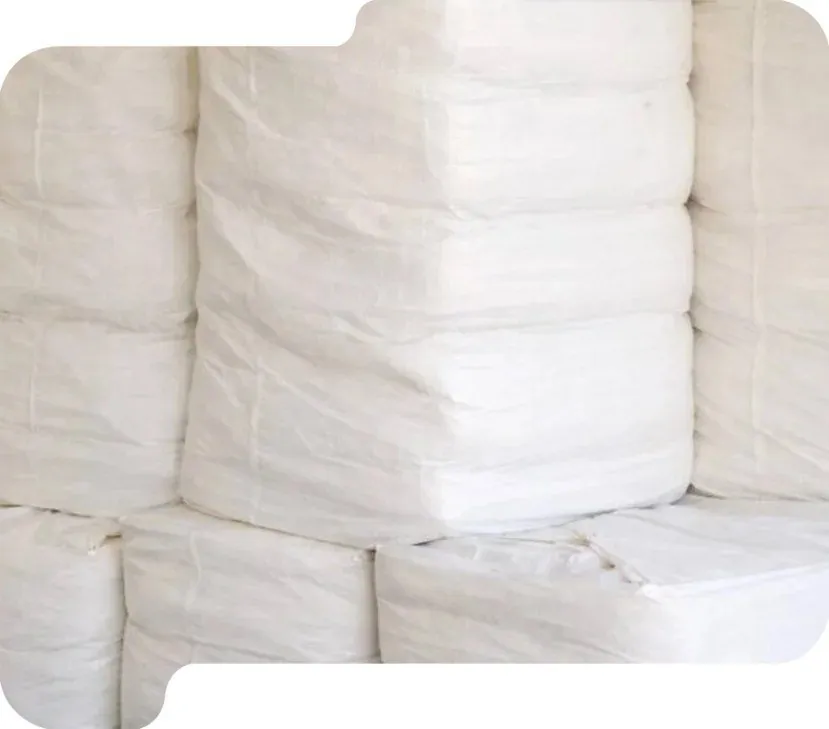
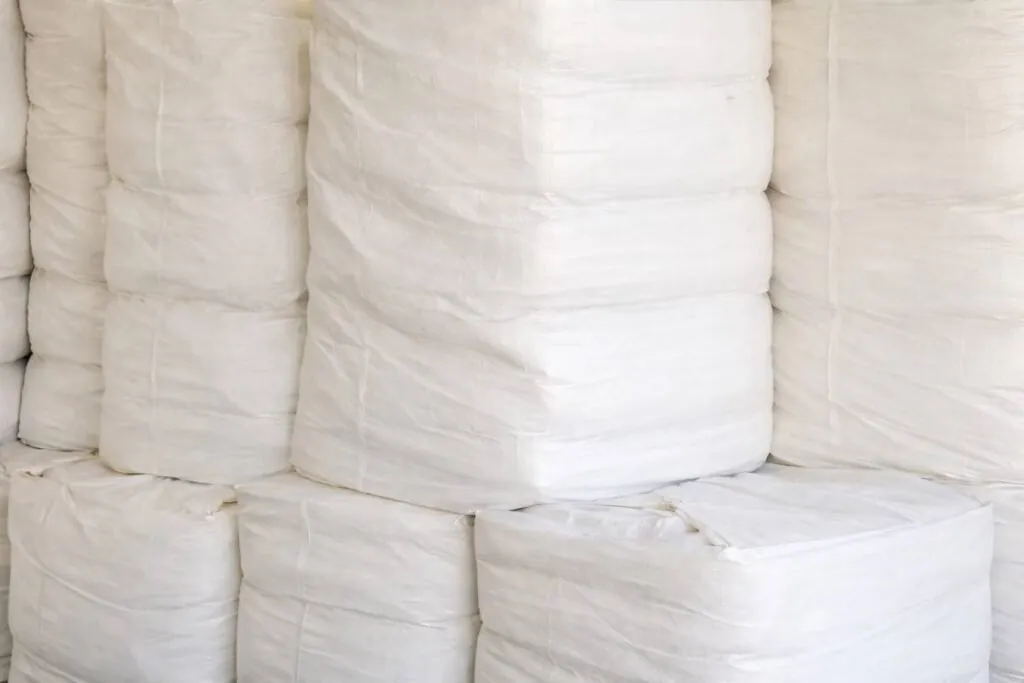
Cotton Bale Packaging
One of the most significant applications is cotton bale packaging.
Cotton bales require packaging that can withstand handling, transportation and storage while helping protect the material from contamination and mechanical damage.
A strong tubular construction can therefore provide a practical advantage in this segment.
Agricultural Packaging
The technology can also be applied to packaging applications involving grains, seeds and other bulk agricultural commodities where robust packaging is required.
Industrial Applications
The versatility of tubular woven fabric opens opportunities beyond packaging, including protective covers, industrial filtration and other heavy-duty textile applications.
The Importance of the Loom Configuration
Perhaps the most interesting aspect of the patent from a textile-engineering perspective is that the innovation is closely connected to the interaction between loom mechanics and weaving design.
The patent defines how cams, harnesses, heddles, warp yarns and weft insertion work together.
In the 4-cam arrangement, the weaving process alternates between different shedding configurations to create the desired 3/1 and 1/3 interlacement.
In the 6-cam arrangement, additional 1/1 plain-weave movement is introduced to strengthen the selvedge.
This demonstrates an important principle in textile manufacturing:
Product innovation can come from process engineering just as much as from the development of new fibres or materials.
A Practical Approach to Textile Innovation
The patent also demonstrates that innovation does not necessarily require replacing an entire manufacturing ecosystem.
The disclosed method is based around a flat-bed loom, while adapting the weaving pattern and cam/harness configuration to achieve tubular double weaving.
The patent further states that the circular woven fabric can also be produced on dobby looms using the disclosed 4-cam and 6-cam weaving patterns.
This opens an interesting perspective for textile manufacturers: existing manufacturing platforms can potentially become the foundation for new products when engineering knowledge is applied creatively.
Indian Textile Manufacturing: From Production to Intellectual Property
India has a long history of textile manufacturing, but the future of the industry will increasingly depend on moving beyond manufacturing alone.
The next stage is about combining:
Manufacturing capability + Engineering expertise + Process innovation + Intellectual Property
A patented weaving process represents this transition.
It demonstrates how practical knowledge developed within the textile manufacturing environment can be transformed into intellectual property and subsequently into new manufacturing capabilities and products.
Looking Ahead
As global industries increasingly demand packaging solutions that are stronger, more efficient, more consistent and more resource-conscious, textile engineering will continue to play an important role.
Technologies such as this patented tubular double-weaving method demonstrate the potential for traditional textile machinery and modern engineering thinking to work together.
The future of textile manufacturing will not simply be about producing more fabric.
It will be about engineering better-performing products, optimising manufacturing processes and converting industrial experience into intellectual property and competitive advantage.
Patent No. 593853 represents an example of this approach—bringing together weaving technology, process innovation and industrial application to create a new pathway for producing seamless tubular woven fabrics for demanding applications.